
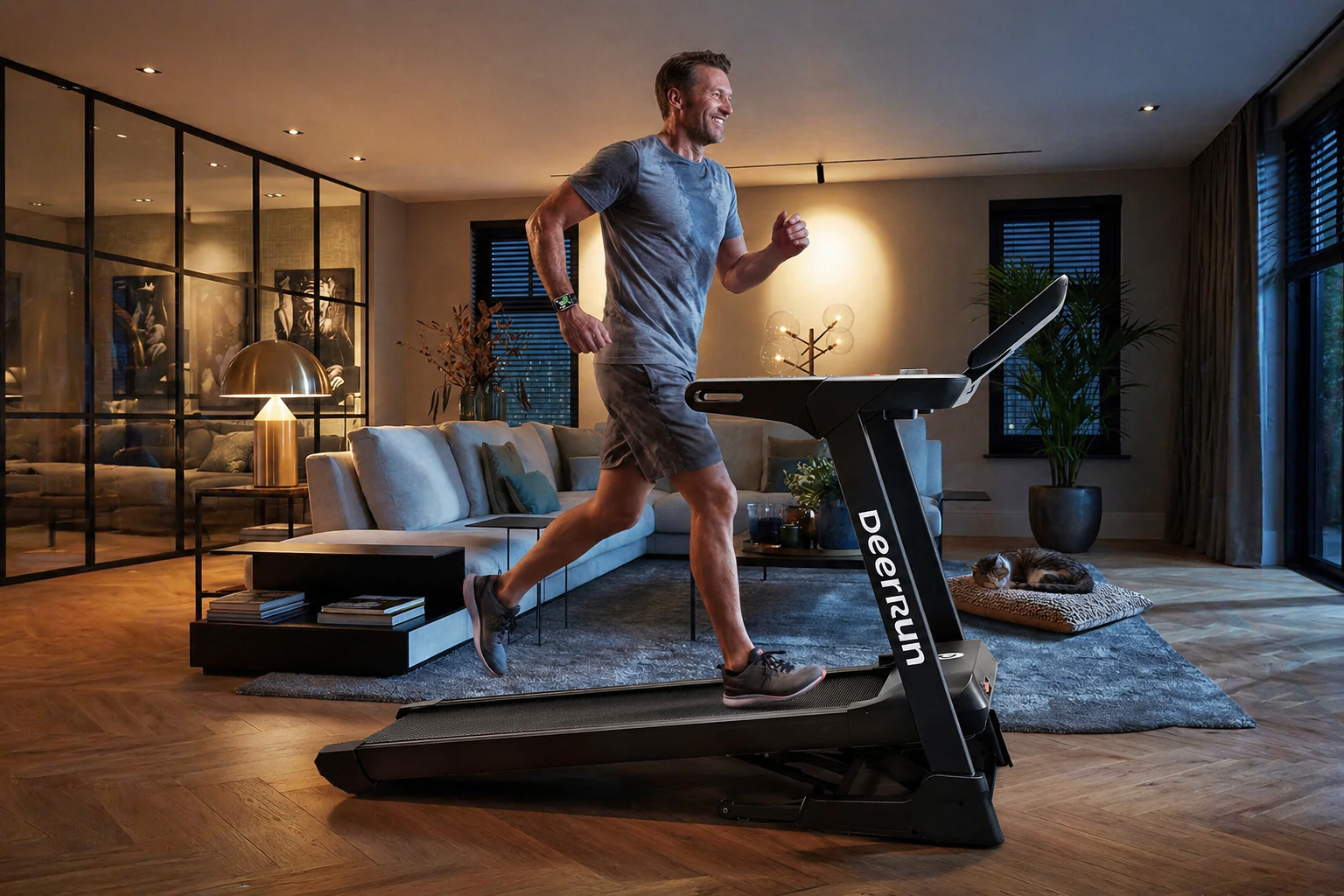
The home fitness industry has undergone a radical transformation. What was once a simple belt-and-motor machine has evolved into a sophisticated digital ecosystem where artificial intelligence serves as your personal coach, pace setter, and form analyst. In 2026, the treadmill is no longer just hardware—it is a terminal for a subscription-based fitness platform, and the platform is where the real value lies. This comprehensive review examines the leading AI treadmill platforms, their features, costs, and real-world performance to help you decide which ecosystem deserves your commitment.
Understanding the AI Treadmill Platform Revolution
The shift from mechanical treadmills to AI-powered platforms represents a fundamental change in how we approach indoor running. Traditional treadmills required you to manually adjust speed and incline, often breaking your stride and disrupting workout flow. Today’s AI platforms learn from your habits, adapt in real time, and deliver coaching that rivals a human personal trainer.
According to market analysis, connected fitness has crossed its “Netflix moment.” Since 2023, major companies have earned more revenue from memberships than from hardware sales. This strategic pivot means the machine you buy is essentially a subsidized terminal for a recurring service. When evaluating an AI treadmill platform, the critical questions become: What does the subscription unlock? How does the AI actually improve your training? And what is the true five-year cost of ownership?
The AI treadmill market has become increasingly competitive. NordicTrack leads recommendation coverage at 69.7%, followed by Sole Fitness at 58.0%, with Peloton, Bowflex, and Life Fitness competing for market share. Each platform offers a distinct philosophy, and understanding these differences is essential before making a purchase decision.
Key Features That Define AI Treadmill Platforms
Before comparing specific platforms, it is important to understand the core technologies that separate AI treadmills from their conventional counterparts. These features work together to create a seamless training experience.
A. Adaptive Speed and Incline Control
This technology automatically adjusts your treadmill’s speed and incline based on trainer cues, heart rate data, or AI-generated workout plans. SmartAdjust, pioneered by iFit, eliminates the need to manually fiddle with controls during intense intervals.
B. Real-Time AI Coaching
AI coaches analyze your performance metrics and provide instant feedback. Some systems, like Merach’s UltraTread T70 Aura, adjust speed and incline based on your heart rate to keep you in optimal cardio zones.
C. Form Analysis and Movement Tracking
Advanced platforms like Peloton’s Tread Vision use movement-tracking cameras to analyze cadence, vertical oscillation, stride length, and vertical ratio, generating a Running Efficiency Score between 1 and 100.
D. Personalized Workout Generation
AI algorithms learn your fitness level, goals, and recovery patterns to create daily workout recommendations. Peloton IQ, for example, analyzes training habits and wearable data to suggest personalized pace ranges.
E. Virtual Terrain and Route Simulation
Platforms like iFit and Urevo offer real-world marathon routes and scenic trails that automatically adjust your treadmill’s incline to match the terrain profile.
F. Multi-User and Family Accounts
Higher-tier subscriptions typically support multiple user profiles, making these platforms viable for households with different fitness goals and schedules.
G. Wearable Integration
Seamless synchronization with Apple Watch, Garmin, Fitbit, and other wearables ensures your workout data contributes to a holistic health picture.
Platform-by-Platform Review
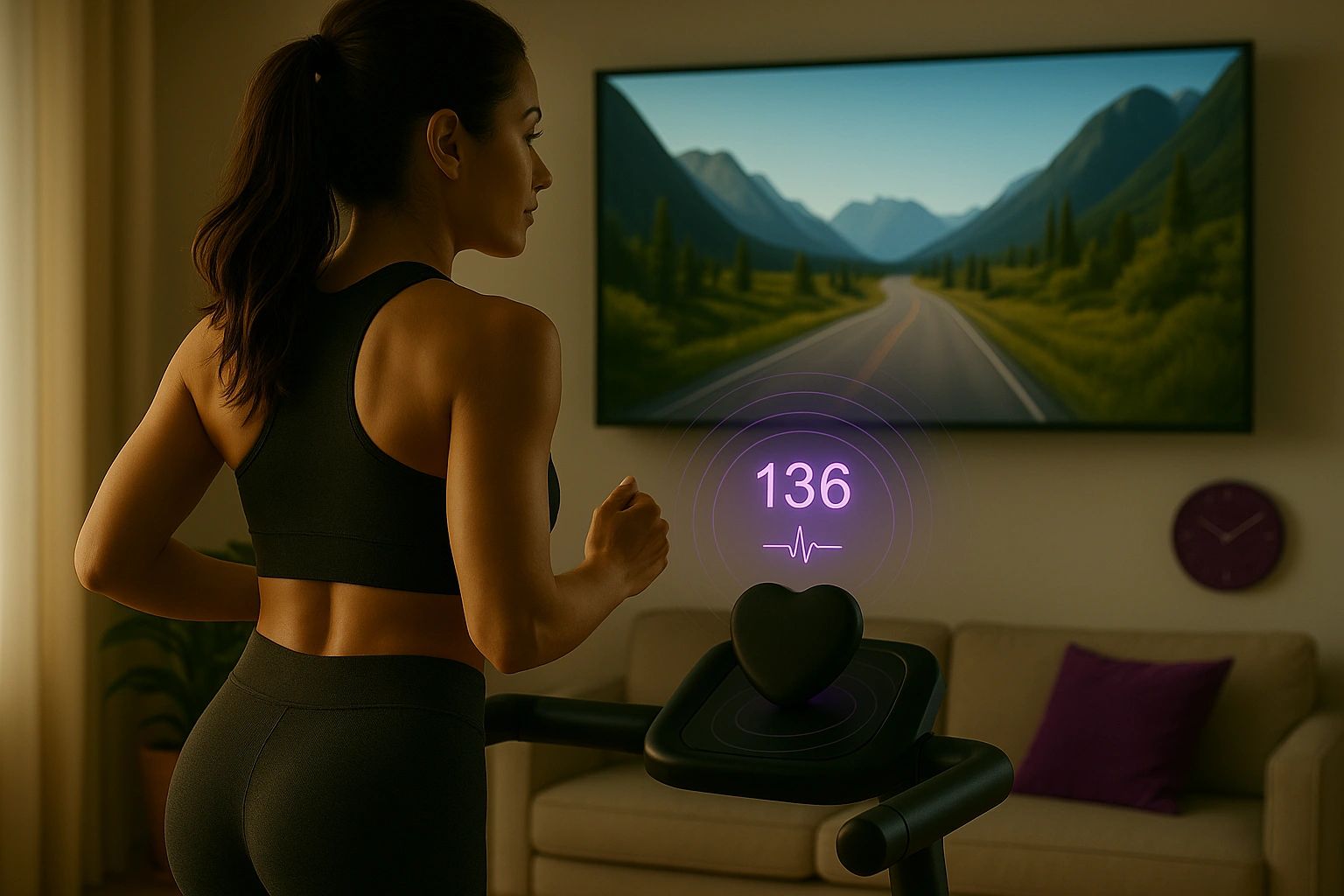
Peloton IQ and the Cross Training Tread
Peloton has positioned itself as the premium option in connected fitness, and its 2026 lineup reinforces this reputation. The Peloton IQ platform, launched alongside the Cross Training Tread, represents the company’s most ambitious AI integration to date.
The Cross Training Tread features a 360-degree swivelling 21.5-inch touchscreen that transitions smoothly from running workouts to floor-based sessions including strength, yoga, and Pilates. This hardware innovation, combined with Peloton IQ’s AI-driven recommendations, creates an experience that feels less like a treadmill and more like an all-in-one digital personal trainer.
Peloton IQ analyzes your training habits, recovery metrics, fitness goals, and wearable data to deliver personalized workout suggestions. The system learns from your performance and adapts recommendations over time, creating a progressively challenging yet achievable training arc. For serious athletes, the Tread Vision model adds a movement-tracking camera that evaluates running form and provides actionable feedback for improvement.
However, Peloton’s premium experience comes at a premium price. The Tread+ now costs $6,695, and the base treadmill is $3,295. Monthly membership fees increased to $49.99, marking the first price hike in three years. The platform’s closed operating system also limits entertainment apps, and the large, non-folding footprint requires dedicated space.
iFit: The Terrain and Family Value Leader
iFit, powering NordicTrack and ProForm treadmills, has built its reputation on an extensive terrain library and strong family value proposition. The platform charges $39 per month for its recommended tier, which includes SmartAdjust, AI coaching, and real-time trainer integration. A minimum tier at $15 monthly provides access to classes and basic tracking but lacks auto-adjust functionality.
The SmartAdjust feature is iFit’s standout technology. During classes, the treadmill automatically shifts speed and incline to match the trainer’s cues, eliminating mid-sprint adjustments. This feature has particular value for apartment dwellers who need to pace runs deliberately to minimize noise, and for users who struggle with decision fatigue during workouts.
iFit’s terrain library allows you to run through scenic locations worldwide, with the treadmill adjusting to match the elevation profile. For families, the platform supports multiple user profiles, and NordicTrack’s hardware range spans from budget-friendly to premium, offering flexibility in total investment.
The five-year cost of ownership for a NordicTrack Commercial 1750 with the recommended subscription tier is approximately $4,479, positioning iFit as a middle-ground option between budget platforms and Peloton’s premium ecosystem.
Bowflex JRNY: Adaptive Coaching at Lower Hardware Cost
Bowflex’s JRNY platform occupies a strategic middle position, offering adaptive coaching features at a more accessible hardware price point. The JRNY app costs $20 monthly, significantly less than both iFit and Peloton.
JRNY’s adaptive coaching learns your fitness level and adjusts workout intensity accordingly. While it may lack the extensive terrain library of iFit or the live class energy of Peloton, it delivers solid AI-driven guidance at a price that makes connected fitness accessible to a broader audience. The five-year cost of a Bowflex Treadmill 22 with JRNY subscription runs approximately $3,549.
Echelon United: Budget Flexibility
Echelon positions itself as the budget-friendly alternative, with the EchelonFit subscription at $40 monthly. The platform offers flexible membership tiers and a range of hardware options. The Echelon Stride-6 reaches a five-year cost of $3,694.
Echelon’s strength lies in its flexibility. Users can choose from various membership levels depending on their needs, and the platform supports both live and on-demand classes. However, the AI coaching capabilities are less sophisticated than those of Peloton IQ or iFit’s SmartAdjust.
Merach UltraTread T70 Aura: Joint Protection Meets AI
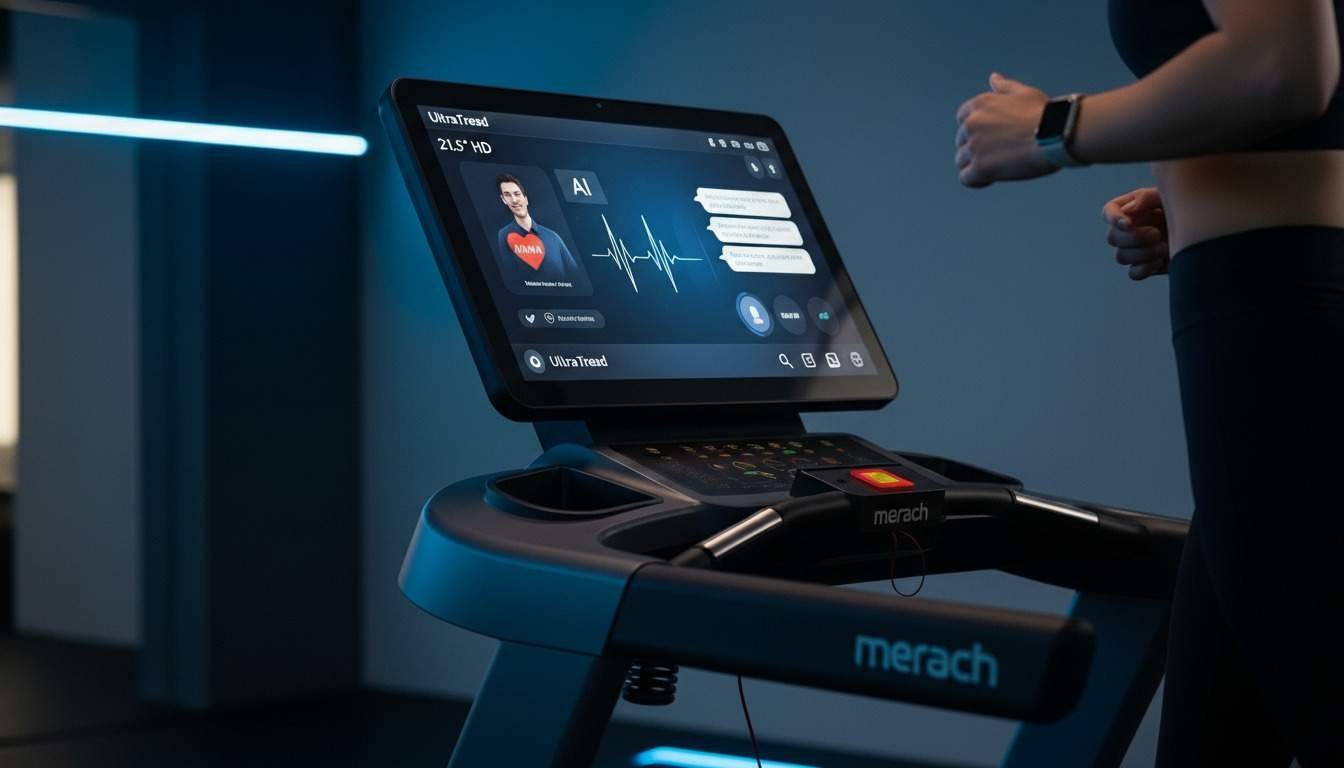
Merach unveiled the UltraTread T70 Aura at CES 2026, introducing a treadmill designed with professional joint protection in mind. The built-in AI coach, which the company states is the first of its kind, personalizes workouts and adjusts speed and incline based on heart rate changes.
The UltraTread pairs with Apple Watch to obtain heart rate readings, ensuring users stay within optimal cardio health zones. Merach’s KneeGuard triple-layer suspension system absorbs 49 times more impact and provides 66% energy return, significantly reducing joint stress. This technology, previously available only in professional gyms and for elite athletes, is now accessible to average consumers.
The UltraTread T70 Aura is expected to retail between $1,200 and $2,000, depending on motor size and display options. This pricing positions it competitively against mid-range options from established brands.
Urevo CyberMega: Marathon Training Specialization
Urevo’s CyberMega Smart Treadmill takes a focused approach, targeting serious runners training for marathons and competitive events. Priced at $1,000, it offers an AI coach with set marathon training plans and real-world marathon routes.
The CyberMega’s AI coach provides structured progression plans, eliminating the need for runners to design their own training schedules. Real-world route simulation allows you to practice specific race courses, including elevation changes, which is invaluable for race preparation. With a 4-horsepower motor and 12.5 mph top speed, it accommodates serious training paces.
Kuta: The On-Device AI Workout Builder
Kuta takes a fundamentally different approach to AI treadmill training. Rather than relying on cloud-based processing, Kuta uses on-device AI to convert plain-language workout ideas into structured treadmill sessions. For example, you can describe “30-min threshold with 4 hill repeats,” and Kuta drafts the workout with exact speed cues.
Kuta Pro is a one-time $5.99 purchase that unlocks AI workout creation, unlimited custom workouts, unlimited favorites, and full history. The 23 preset workouts remain free forever. The platform is 100% on-device, meaning no cloud processing and no account required, addressing privacy concerns that some users have with other platforms.
Subscription Costs and Five-Year Ownership Analysis
Understanding the true cost of an AI treadmill platform requires looking beyond the sticker price. Here is a comparison of five-year ownership costs across major platforms:
A. Peloton Tread with All-Access Membership
Hardware: $3,295 (base) or $6,695 (Tread+)
Monthly subscription: $49.99
Five-year ownership (base + subscription): approximately $6,294
B. NordicTrack Commercial 1750 with iFit Pro
Hardware: approximately $2,000
Monthly subscription: $39 (recommended tier)
Five-year ownership: approximately $4,479
C. Bowflex Treadmill 22 with JRNY
Hardware: approximately $2,349
Monthly subscription: $20
Five-year ownership: approximately $3,549
D. Echelon Stride-6 with EchelonFit
Hardware: approximately $1,294
Monthly subscription: $40
Five-year ownership: approximately $3,694
E. Sole F80 with SOLE+ (Free App)
Hardware: $1,900
Subscription: Free
Five-year ownership: $1,900
The five-year cost gap between a budget folding machine ($300-$500) and a premium adaptive treadmill ($5,600+) is substantial, but so is the difference in features and experience. The key is determining which features genuinely enhance your training and which are nice-to-have additions that you may not use consistently.
Which Adaptive Features Are Worth Paying For?
Not all AI features deliver equal value. Here is an assessment of the most common adaptive technologies:
A. SmartAdjust (iFit)
This feature automatically adjusts speed and incline to match trainer cues during classes. It is particularly valuable for users who want to remove decision fatigue from their workouts or who live in apartments and need to pace runs deliberately.
B. AI Coaching with Heart Rate Integration
Merach’s UltraTread T70 Aura adjusts intensity based on real-time heart rate data, ensuring you train in the correct cardio zone. This is genuinely useful for users focused on heart rate training or recovery.
C. Form Analysis and Running Efficiency Scoring
Peloton’s movement-tracking camera provides detailed feedback on running mechanics. For runners prone to injury or those seeking performance improvement, this feature offers actionable insights that can lead to meaningful form corrections.
D. Personalized Pace Targets
Features like Peloton IQ’s Pace Targets learn from recent training and suggest appropriate pace ranges. This is valuable for runners who struggle with pacing or want to ensure they are training at the right intensity.
E. Virtual Terrain and Route Simulation
For treadmill runners who find indoor training monotonous, terrain simulation can significantly improve engagement. iFit’s global terrain library and Urevo’s marathon route replication are standout examples.
Features that may not justify premium pricing include basic workout tracking (available in free apps), simple interval timers, and social features that duplicate what you can achieve with a smartphone.
Hardware Considerations for AI Treadmills
While the platform determines much of the experience, hardware quality remains important. Key considerations include:
A. Motor Power
For walking and light jogging, a 2.5 HP motor suffices. Serious runners should look for 3.5 HP or higher. The Urevo CyberMega’s 4 HP motor supports speeds up to 12.5 mph.
B. Deck Cushioning
Joint protection is critical for regular runners. Merach’s KneeGuard system and Peloton’s redesigned deck with internal dampeners represent significant advancements in this area.
C. Display and Controls
Swivelling touchscreens, like Peloton’s 360-degree 21.5-inch display, enable versatile workout transitions. Ergonomic controls, including Peloton’s Jump Buttons, allow instant speed and incline changes.
D. Footprint and Storage
Folding designs and compact walking pads serve space-constrained homes, while full-size treadmills with non-folding frames offer greater stability but require dedicated floor space.
E. Noise Level
Apartment dwellers should prioritize treadmills with noise reduction features. The Urevo CyberMega operates at approximately 40 decibels.
Who Should Choose Each Platform?
A. Peloton IQ
Choose Peloton if you value live classes, community engagement, and premium production quality. The platform is ideal for users who want a comprehensive fitness ecosystem that extends beyond running to strength, yoga, and recovery. Be prepared for higher upfront and ongoing costs.
B. iFit (NordicTrack/ProForm)
Choose iFit if you enjoy virtual terrain running, have multiple family members who will use the treadmill, and want proven adaptive technology. The terrain library and family account structure offer excellent value for households.
C. Bowflex JRNY
Choose JRNY if you want adaptive coaching without premium pricing. It is a solid middle-ground option for users who value AI guidance but do not need the full Peloton ecosystem.
D. Echelon United
Choose Echelon if budget flexibility is a priority. The platform offers decent features at accessible price points, though the AI capabilities are less advanced than competitors.
E. Kuta
Choose Kuta if you prefer on-device AI, value privacy, and want a simple, one-time purchase model. It is ideal for users who already have a treadmill and want AI workout generation without a subscription commitment.
F. Urevo CyberMega
Choose Urevo if you are training for a specific race and want structured marathon preparation. The $1,000 price point makes it an attractive option for dedicated runners.
The Future of AI Treadmill Platforms
The trajectory of AI treadmill platforms points toward increasingly sophisticated personalization. We can expect to see more advanced form analysis, predictive training recommendations based on recovery metrics, and deeper integration with smart home ecosystems. The platform, not the hardware, will continue to be the primary differentiator.
As the market matures, consolidation is likely. Platform survival risk is a genuine concern—Peloton’s near-collapse in 2022 demonstrated that even market leaders can face existential challenges. When committing to a five-year subscription, consider the company’s financial stability and track record of platform support.
The rise of on-device AI, exemplified by Kuta, suggests a counter-trend toward privacy-focused, subscription-free options. As device processors become more powerful, more AI features may migrate from the cloud to the device, potentially reducing subscription costs.
Conclusion
The AI treadmill platform market in 2026 offers unprecedented choice. Peloton IQ delivers the most polished premium experience, iFit provides exceptional terrain variety and family value, JRNY offers adaptive coaching at a lower price point, and specialized options like Merach and Urevo address specific needs such as joint protection and marathon training.
The most important decision is not which treadmill to buy, but which platform to commit to. The platform determines your monthly cost, content quality, family experience, and the longevity of your investment. Choose the ecosystem that aligns with your training goals, budget, and household needs. Then select hardware within that ecosystem.
For serious runners seeking comprehensive AI coaching, Peloton IQ or iFit represent the most mature platforms. For budget-conscious users who still want adaptive features, JRNY and Echelon offer viable alternatives. And for privacy-focused users or those who prefer one-time purchases, Kuta provides a compelling on-device solution.
The AI treadmill platform revolution has made home running more engaging, more effective, and more personalized than ever before. The question is no longer whether AI can improve your training it is which AI platform will best support your fitness journey for years to come.