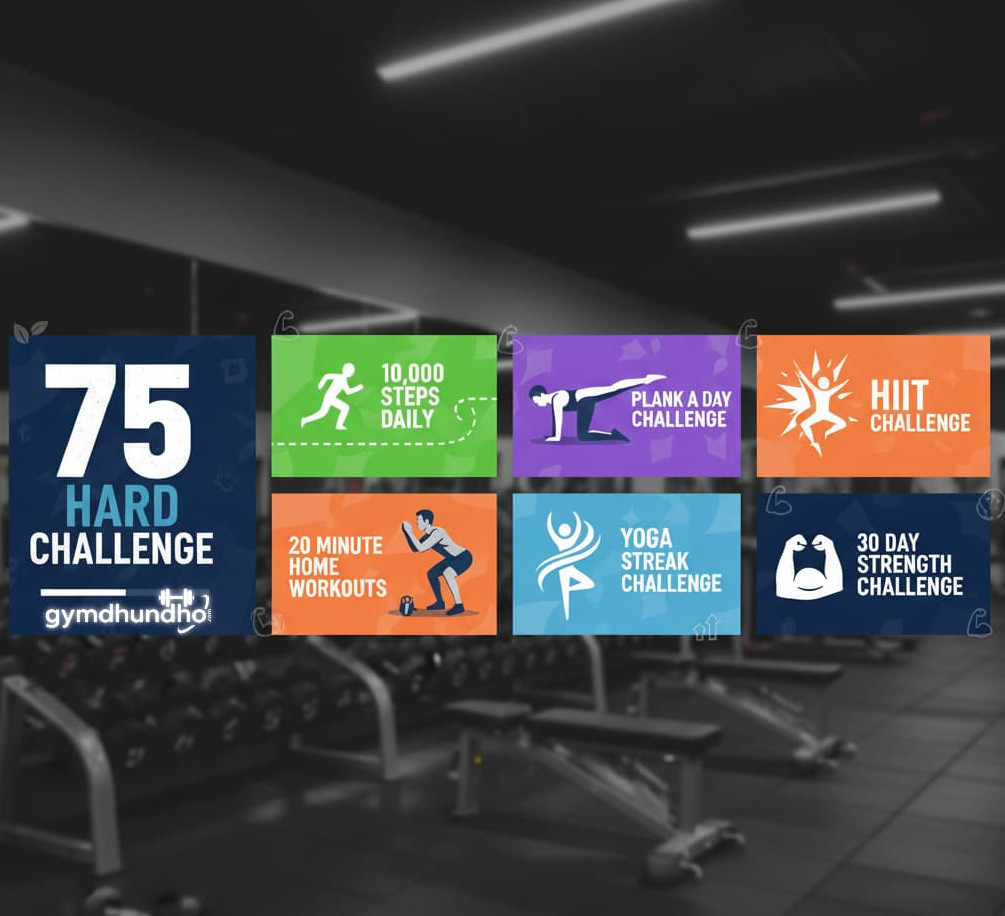
Social media fitness challenges have a peculiar way of capturing collective attention. They promise dramatic transformations, forge communities of accountability, and often collapse under the weight of their own unrealistic expectations. The 75 Hard Challenge, created by entrepreneur Andy Frisella, epitomized this phenomenon a regimen so demanding that it required two daily workouts (one outdoors, rain or shine), a gallon of water, a strict diet with zero deviations, ten pages of nonfiction reading, and a daily progress photograph. Miss any single task, and you would restart from day one. For many, that all-or-nothing framework was precisely the problem. Life does not pause for perfection.
Enter the 75 Medium Challenge a viral alternative that has quietly amassed a devoted following on TikTok, Instagram, and fitness forums. It occupies the sweet spot between the unforgiving rigidity of 75 Hard and the gentleness of 75 Soft. The premise is deceptively simple: build discipline through consistency, not through suffering. As sports medicine physician Dr. Michael Dakkak explains, “75 Medium is designed to be accessible. It focuses on many of the same principles as 75 Hard and 75 Soft, but it’s achievable for the average person”.
This article provides a comprehensive exploration of the 75 Medium Challenge its rules, its scientific underpinnings, its practical execution, and its limitations. Whether you are a seasoned fitness enthusiast seeking a structured reset or a complete beginner hoping to establish your first sustainable routine, understanding this challenge can illuminate a path toward lasting change.
What Exactly Is the 75 Medium Challenge?
The 75 Medium Challenge is a 75-day self-improvement lifestyle program that encourages participants to build healthier habits through consistent exercise, mindful nutrition, and personal development. Unlike its predecessor, which mandates a strict set of non-negotiable rules, 75 Medium allows for planned flexibility. The philosophy is straightforward: encourage consistency without demanding perfection. Dr. Dakkak emphasizes, “It helps to be flexible and forgiving when you’re trying to make significant lifestyle changes. You can get really consistent, achievable results without having to feel restricted”.
There is no single official rulebook for 75 Medium. The challenge grew organically from online communities rather than from a single creator, which means variations exist. However, most versions follow a similar framework built around six core pillars that address physical, mental, and emotional health. This community-driven nature is part of its appeal participants can tailor the challenge to their unique circumstances while retaining the structure that makes it effective.
The challenge derives its name from its position in the fitness challenge hierarchy. It is more demanding than 75 Soft, which offers significant flexibility, yet more attainable than 75 Hard, which many find unsustainable. For those who have attempted 75 Hard and abandoned it by week two or who never dared to start 75 Medium represents a realistic middle path.
The Six Pillars: Rules of Engagement
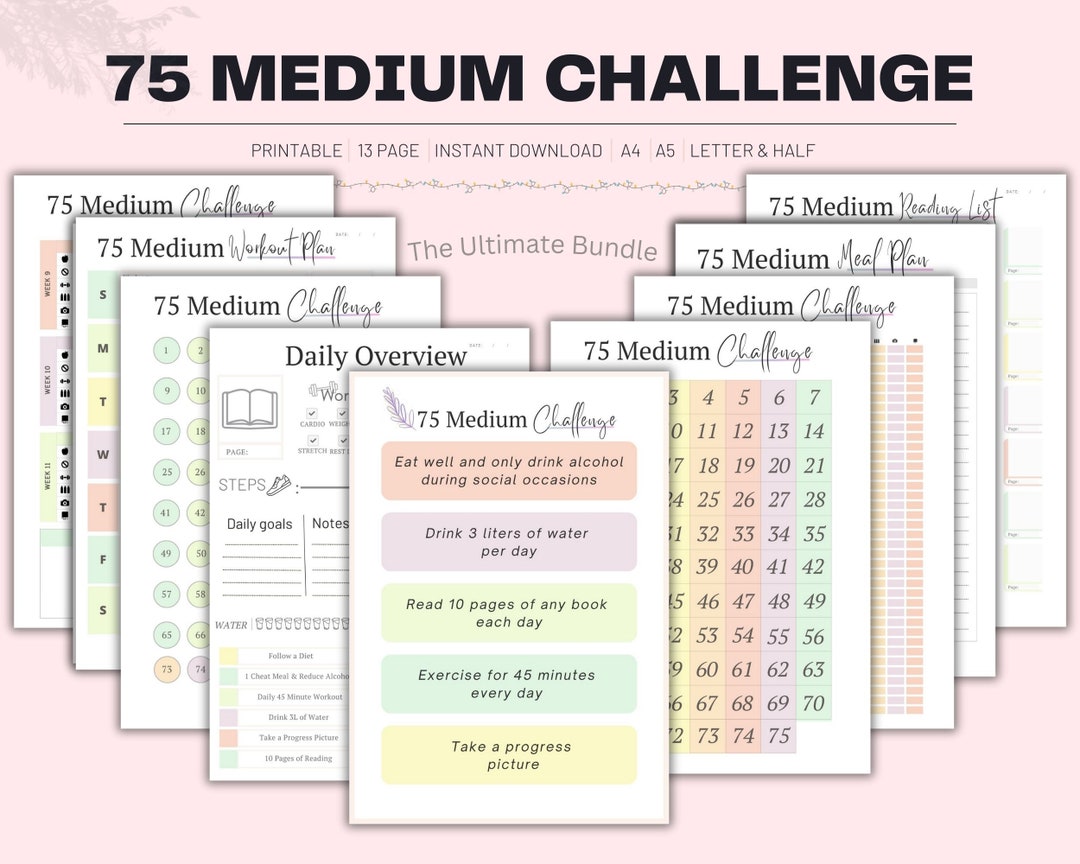
While exact requirements can vary, the most widely followed version of 75 Medium includes six daily tasks that must be completed for 75 consecutive days. These pillars form the foundation of the challenge and are designed to be achievable for working professionals, parents, and beginners alike.
A. Daily Movement
Most versions of 75 Medium call for one workout session lasting 45 to 60 minutes each day. This is a significant departure from 75 Hard, which requires two separate 45-minute workouts, one of which must take place outdoors regardless of weather conditions. The type of physical activity is entirely up to the participant. You can walk, swim, cycle, hike, lift weights, practice yoga, or engage in any form of movement that elevates your heart rate and challenges your muscles. The key is consistency, not intensity. Dr. Dakkak suggests that beginners can build up to 45 minutes by starting with a daily stretching routine or just 15 minutes of exercise, gradually increasing as their capacity grows.
B. Structured Nutrition (90% Compliance)
Participants select a nutritional plan aligned with their personal goals—whether that is Mediterranean, high-protein, low-carb, vegetarian, or simply a whole-foods approach—and follow it 90% of the time. In practical terms, this allows for approximately one planned indulgence per week or a small daily allowance of about 10% of caloric intake. Alcohol is excluded entirely for the duration of the challenge, representing one of the few non-negotiable rules. This 90/10 framework is designed to eliminate the guilt cycle that derails most diets. As personal trainer James Bickerstaff notes, “Allowing even the smallest bit of flexibility helps you stay consistent without feeling restricted”.
C. Hydration Goals
Rather than mandating a flat gallon of water per day a requirement that ignores individual body composition—75 Medium scales hydration to the participant’s weight. The standard recommendation is to consume half your body weight in ounces of water daily. For example, a 150-pound individual would drink 75 ounces, while a 200-pound person would aim for 100 ounces. This personalized approach is both more physiologically sound and more achievable for people of varying sizes.
D. Personal Development
Each day, participants dedicate at least ten minutes to reading, listening to, or watching something inspirational. This could be a self-help book, a personal development podcast, an educational YouTube video, or any content that promotes growth and learning. The goal is to feed the mind alongside the body, reinforcing the challenge’s holistic philosophy.
E. Mindfulness Practice
Five to ten minutes of daily meditation, prayer, or mindfulness practice is encouraged. This component distinguishes 75 Medium from purely physical challenges. By incorporating stillness and reflection, participants cultivate emotional resilience and stress reduction foundational elements of holistic well-being.
F. Daily Progress Documentation
Most 75 Medium practitioners take one progress photograph each day. This can be a full-body image or a selfie, depending on personal preference. While the requirement may seem superficial, the practice serves a powerful psychological function: it provides tangible evidence of gradual change that might otherwise go unnoticed in the mirror.
How 75 Medium Compares to 75 Hard and 75 Soft
Understanding the distinctions between these three challenges helps clarify why 75 Medium has gained such traction.
| Feature | 75 Hard | 75 Medium | 75 Soft |
|---|---|---|---|
| Workouts | Two 45-min sessions (one outdoors) | One 45-min session | One 45-min session |
| Diet | Strict, no deviations | 90% compliance | Flexible guidelines |
| Hydration | One gallon | Half body weight in ounces | Adequate intake |
| Alcohol | Prohibited | Prohibited | Moderate |
| Reading | 10 pages nonfiction | 10 minutes inspirational | 10 minutes |
| Meditation | Not required | 5-10 minutes | Optional |
| Progress Photos | Daily | Daily | Weekly |
| Missed Task Consequence | Restart from day one | Continue (with accountability) | Continue |
The 75 Hard Challenge, created by Andy Frisella in 2019, gained massive popularity for its uncompromising nature. However, strength and conditioning coach Andy Vincent observes, “When 75 Hard came out, many people jumped on to the challenge, but it was very clear that a lot of what the challenge encompassed wasn’t sustainable, probably not even for 75 days, let alone things that you’d stick to in the long term”. Two workouts per day proved impractical for most individuals, and the one-gallon water requirement ignored basic physiological differences between people of different sizes.
75 Soft emerged as a gentler alternative, offering significant flexibility. However, its lack of structure left some participants feeling unanchored. 75 Medium fills this gap by retaining accountability while removing unnecessary rigidity. It is, as one fitness publication aptly described, “the Goldilocks of viral fitness challenges”.
The Science Behind the 75-Day Window
Why 75 days? The duration is not arbitrary. Habit formation research consistently demonstrates that daily behaviors take roughly two to three months of repetition to become automatic. A landmark study conducted by researchers at University College London tracked 96 volunteers adopting new daily behaviors and found that automaticity plateaued at a median of 66 days, with a range extending from 18 to 254 days depending on the complexity of the behavior and individual differences. The 75-day timeframe lands squarely within this window, providing sufficient repetition for new behaviors to become entrenched.
From a physiological perspective, a single 45-minute daily workout comfortably satisfies public health guidelines. The American College of Sports Medicine recommends 150 to 300 minutes of moderate aerobic activity per week, plus two to three resistance training sessions. A daily 45-minute session accumulates to 315 minutes weekly, exceeding the minimum threshold. Furthermore, research published in the Journal of the American College of Cardiology, involving over 55,000 adults, found that most of the mortality benefit from running appeared with even less than an hour of weekly activity, with the dose-response curve flattening well before the weekly total achieved through 75 Medium.
The caveat, however, is progression. Novice exercisers who jump directly into 45 minutes of daily activity from a sedentary baseline are 1.6 times more likely to experience overuse injuries within the first eight to ten weeks—precisely the window of the challenge. This underscores the importance of scaling appropriately and consulting healthcare providers before beginning any new fitness regimen.
Benefits of the 75 Medium Challenge
The appeal of 75 Medium extends far beyond physical transformation. Participants report a constellation of benefits that touch every dimension of well-being.
A. Sustainable Habit Development
The primary benefit is the cultivation of lasting habits. By committing to manageable daily actions over 75 days, participants develop automatic routines around exercise, hydration, nutrition, and mindfulness. These habits often persist long after the challenge concludes, forming the foundation of a permanently healthier lifestyle.
B. Mental Resilience
The mindfulness and personal development components explicitly target emotional well-being. Adding meditation and inspirational reading encourages emotional resilience and stress reduction, which are foundational for holistic health. Participants frequently report improved mood, reduced anxiety, and greater emotional stability.
C. Physical Transformation
While the challenge is not designed as a rapid weight-loss program, many participants experience meaningful body composition changes. One participant who completed 75 Medium twice reported losing seven pounds over 75 days during her second round, despite the challenge not being primarily focused on weight loss. Another reported a 3.2-pound drop in the first week alone, describing it as “a huge motivator”.
D. Increased Energy and Vitality
Consistent movement, proper hydration, and improved nutrition collectively enhance energy levels. Participants commonly report better sleep quality, improved skin clarity, and greater overall vitality as their bodies adapt to healthier inputs.
E. Community and Accountability
The viral nature of the challenge has spawned a global community of participants who share their journeys on social media. This community-focused approach offers mutual support and motivation, significantly enhancing adherence and reducing the isolation that often accompanies personal transformation efforts.
Potential Drawbacks and Considerations
No challenge is universally appropriate, and 75 Medium carries potential risks that warrant honest examination.
A. Risk of Disordered Eating
Registered dietitian Supatra Tovar cautions that “a rigid program like 75 Medium can risk triggering disordered eating, exercise addiction, or body image issues, particularly with elements like daily progress photos and strict dietary adherence”. Individuals with a history of eating disorders or body dysmorphia should approach the challenge with professional guidance or consider an alternative structure.
B. Scheduling Challenges
The requirement for daily workouts, meal planning, and mindfulness practice can be difficult for individuals with unpredictable work schedules or demanding caregiving responsibilities. While 75 Medium is more flexible than 75 Hard, it still demands a significant daily time commitment that not everyone can accommodate.
C. Psychological Pressure
The structure and dedication required even in a moderated form can negatively affect individuals who tie their self-worth to challenge completion. Missing a day or falling short of 90% dietary compliance may trigger feelings of failure that undermine the very confidence the challenge seeks to build.
D. Injury Risk
As previously noted, jumping into daily exercise without proper progression increases injury risk. Beginners should prioritize gradual adaptation rather than attempting to match the intensity of experienced participants.
Real Success Stories
The most compelling evidence for any fitness program comes from those who have completed it. Their experiences illuminate both the rewards and the realities of the 75 Medium journey.
One participant who completed the challenge for a second time shared her before-and-after results: “I started this challenge at 143 pounds and plateaued at 136 pounds, so I lost 7 pounds over 75 days. I have said time and time again that for me, this challenge was not about weight loss. I wanted to challenge myself to reset and establish some habits”. Her second round was complicated by accepting a foster placement mid-challenge, which disrupted her meal planning and exercise schedule. Yet she persisted, demonstrating the adaptability that defines 75 Medium. “I feel strongly that 75 Medium was the perfect balance of being a challenge a little bit more challenging than 75 Soft but also realistic for me. 75 Hard was absolutely NOT for me”.
Another participant described her transformation in holistic terms: “My personal experience with the workouts was transformative. I focused on a combination of strength training to build lean muscle and outdoor cardio like brisk walks or runs. I noticed significant changes in my arm definition, core strength, and overall energy levels. It wasn’t about being skinny, but about being strong, fit, and feeling good in my skin”. She also highlighted the psychological value of daily progress photos: “Even on days when I felt discouraged, seeing those subtle changes over time reminded me how far I’d come. Those pictures served as undeniable proof that the hard work was paying off”.
A third participant emphasized the mental shift that occurred: “This journey isn’t just about physical changes; it’s a deep dive into mental fortitude and consistency. It’s not just about pushing your body; it’s about training your mind”. Such testimonials consistently point to a common theme: the challenge’s most enduring gift is not a transformed body but a transformed mindset.
Practical Tips for Success
Completing 75 Medium requires more than motivation. It requires strategy, preparation, and self-compassion. The following recommendations draw from the experiences of those who have successfully navigated the challenge.
A. Plan Your Week
Meal planning is only half the battle. Successful participants also schedule their workouts in advance, assigning specific days to specific activities. “Knowing what days I am going to the gym and what days I am doing which workouts helps me stay on track so I make fewer excuses about not working out”.
B. Start Where You Are
If 45 minutes of daily exercise feels daunting, begin with 15 or 20 minutes and gradually increase. The challenge is a marathon, not a sprint. Dr. Dakkak advises, “If your goal is to make healthy improvements over the course of 75 days, it’s safest to start with what you know you can do and build yourself up from there”.
C. Embrace the 90/10 Rule
The 90% dietary compliance rule is not a loophole it is a deliberate feature designed to prevent the psychological backlash of extreme restriction. Enjoying a moderate treat without guilt is part of the program, not a failure of it. Portion control and ingredient substitutions can allow you to enjoy foods you love while still honoring your nutritional goals.
D. Give Your Best, Even When It’s Not 100%
There will be days when energy is low, motivation is absent, and the last thing you want to do is exercise. On those days, showing up with 50% effort is infinitely better than not showing up at all. “Showing up and giving 50% is better than not showing up at all. And showing up even with less effort still counts”.
E. Invest in the Right Tools
A reusable water bottle with volume markings, a habit-tracking app or printable checklist, and a designated space for workouts can reduce friction and increase adherence. Small environmental adjustments often yield disproportionate results.
F. Focus on Recovery
Rest is not a violation of the challenge it is a component of it. Active recovery days, adequate sleep, and proper nutrition support the body’s adaptation to increased physical demands. Overtraining undermines progress and increases injury risk.
G. Document More Than Weight
While daily progress photos are required, tracking additional metrics such as resting heart rate, waist circumference, energy levels, and sleep quality provides a more comprehensive picture of transformation. Weight alone is a poor indicator of health and fitness progress.
Conclusion: A Challenge Worth Considering
The 75 Medium Challenge represents a maturation of the viral fitness phenomenon. It acknowledges that sustainable transformation does not require suffering. It recognizes that consistency, not intensity, is the true driver of long-term change. And it offers a structured yet flexible framework that working adults, parents, and beginners can realistically follow.
That said, 75 Medium is not for everyone. Individuals with a history of eating disorders, exercise addiction, or body image issues should proceed with caution or pursue alternative approaches with professional guidance. Those with demanding schedules may find the daily time commitment challenging. And anyone considering the challenge should consult a healthcare provider before beginning, particularly if they have pre-existing medical conditions or are new to regular exercise.
For those who are ready, the 75 Medium Challenge offers a proven pathway toward better health, greater discipline, and a more resilient mind. The science of habit formation supports its duration. The experiences of its participants validate its effectiveness. And its viral popularity confirms its resonance in a culture increasingly hungry for sustainable approaches to wellness.
The challenge is not about becoming a different person. It is about becoming a more consistent version of the person you already are one who shows up, day after day, for 75 days, and discovers that the person who emerges on the other side is stronger, calmer, and more capable than they ever imagined.